
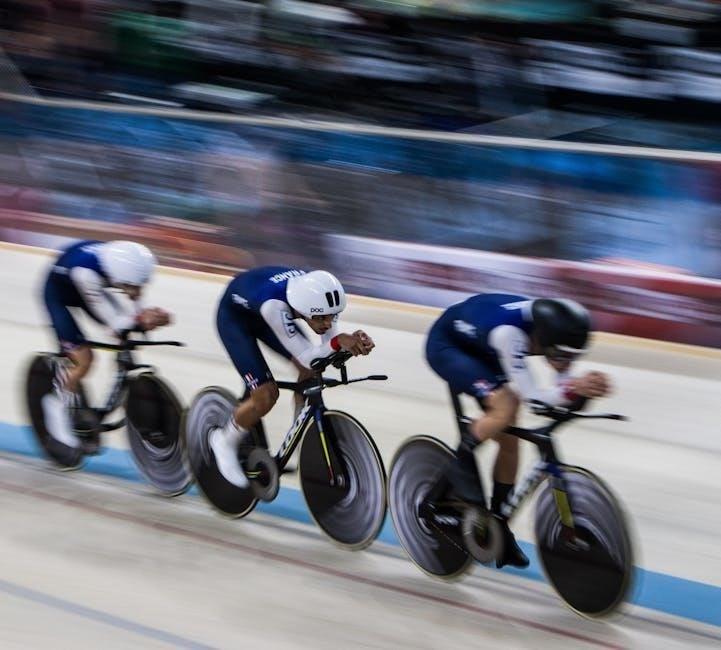
Race Strategy Examples: A Comprehensive Overview
Recent shifts in Formula 1 strategy‚ exemplified by personnel moves like Will Courtenay to McLaren‚ highlight evolving approaches.
McLaren’s backing of Piastri despite questionable calls demonstrates trust in their strategic team. Goodyear’s new Global Racing organization signifies a unified approach.
Race strategy in motorsports‚ particularly Formula 1‚ is a complex discipline extending far beyond simply choosing when to pit. It’s a dynamic process of predicting and reacting to a multitude of variables – competitor actions‚ tire degradation‚ fuel consumption‚ and crucially‚ unpredictable events like safety cars or changing weather conditions. The core objective is maximizing a team’s chances of achieving the best possible race result‚ which isn’t always outright victory.
Modern race strategy relies heavily on sophisticated data analysis and simulations. Teams employ dedicated strategists who monitor real-time data‚ utilizing advanced algorithms to model various scenarios. The recent movement of key personnel‚ such as Will Courtenay from Red Bull to McLaren‚ underscores the high value placed on strategic expertise. These specialists aren’t just reacting; they’re proactively shaping the race outcome.
Furthermore‚ understanding the nuances of tire management and fuel saving are integral components. A well-executed strategy can elevate a slower car to a competitive position‚ while a misstep can squander a significant advantage. The formation of Goodyear’s Global Racing organization demonstrates a commitment to a holistic‚ strategically-driven approach to racing.
The Core Principles of Race Strategy
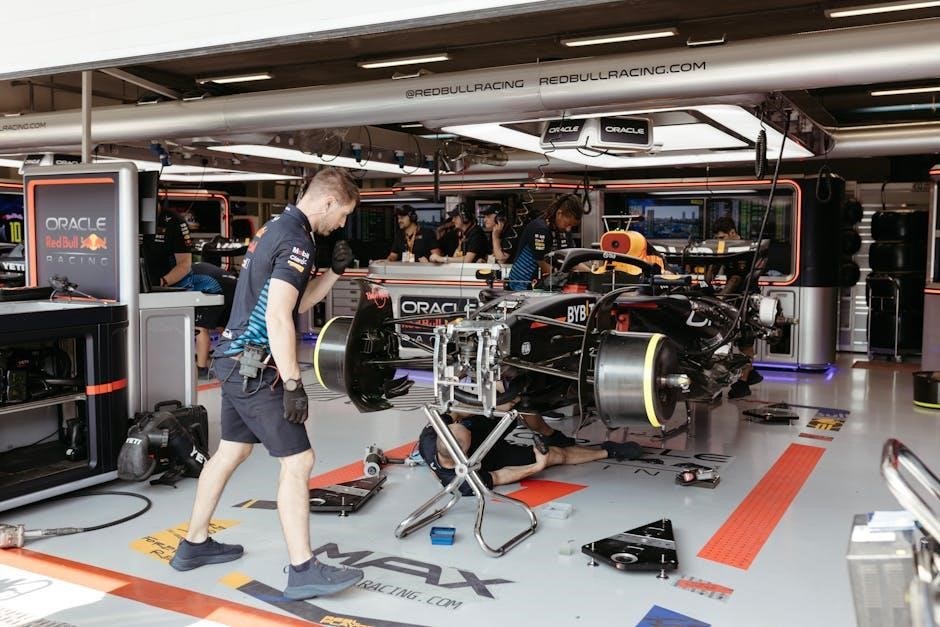
Fundamental to race strategy is the concept of optimizing performance within constraints. These constraints include fuel load‚ tire allocation‚ pit stop windows‚ and the inherent limitations of the car’s performance. A successful strategy isn’t necessarily the fastest possible‚ but the most efficient given the circumstances. Predicting competitor behavior is also paramount; anticipating rivals’ pit stops or tire choices allows for counter-strategies.
Risk assessment forms another core principle. Teams must weigh the potential gains of an aggressive strategy – like an undercut or overcut – against the risks of being compromised by unforeseen events‚ such as a safety car period. The recent support shown to Oscar Piastri by McLaren‚ despite debatable calls‚ highlights a willingness to accept calculated risks.
Adaptability is crucial. Races rarely unfold as predicted. Strategists must be prepared to rapidly reassess and adjust their plans in response to changing conditions. The formation of Goodyear’s new Global Racing organization emphasizes a unified‚ adaptable strategic framework. Ultimately‚ the core principles revolve around maximizing points‚ not just chasing the fastest lap.
Data Analysis in Race Strategy
Robust data analysis is the bedrock of modern race strategy. Teams collect and analyze vast amounts of telemetry – including lap times‚ tire pressures‚ fuel consumption‚ and aerodynamic data – to build predictive models. These models simulate race scenarios‚ evaluating the potential outcomes of different strategic choices. Historical race data‚ encompassing performance at specific circuits and under varying conditions‚ is also critical.
Analyzing competitor data is equally important. Teams monitor rivals’ pace‚ tire wear‚ and pit stop timings to infer their strategies and anticipate their moves. The recent movement of Will Courtenay from Red Bull to McLaren signifies a heightened focus on strategic intelligence. Data isn’t just about speed; it’s about understanding the relationships between variables.
Furthermore‚ real-time data analysis during the race allows strategists to refine their plans based on unfolding events. Sophisticated algorithms identify opportunities for undercuts‚ overcuts‚ or adjustments to fuel saving. Goodyear’s unified Global Racing organization likely leverages data to optimize tire strategies across the field.
Tire Management Strategies
Effective tire management is paramount in Formula 1‚ directly influencing race pace and strategic options. Teams employ various strategies to maximize tire life‚ including adjusting driving styles to minimize degradation and optimizing tire pressures. Understanding the characteristics of different tire compounds – soft‚ medium‚ and hard – is crucial for selecting the optimal race strategy.
Strategies often revolve around balancing performance and durability. An aggressive strategy might prioritize qualifying pace with softer tires‚ accepting increased degradation during the race. Conversely‚ a conservative approach focuses on longer stints with harder compounds‚ sacrificing initial speed for consistency. Goodyear’s new Global Racing organization will undoubtedly focus heavily on tire performance optimization.
Pit stop timing is intrinsically linked to tire management. Teams aim to pit before tires lose significant grip‚ but must also consider track position and potential undercut/overcut opportunities. McLaren’s recent strategy calls‚ despite potentially costing Piastri a win‚ demonstrate a willingness to experiment with tire strategies.
Fuel Saving Techniques
Fuel conservation is a critical component of modern Formula 1 race strategy‚ often dictating pace and pit stop timing. Teams utilize sophisticated engine mapping and lift-and-coast techniques to minimize fuel consumption without drastically compromising lap times. Drivers are instructed on optimal throttle control and braking points to maximize efficiency.
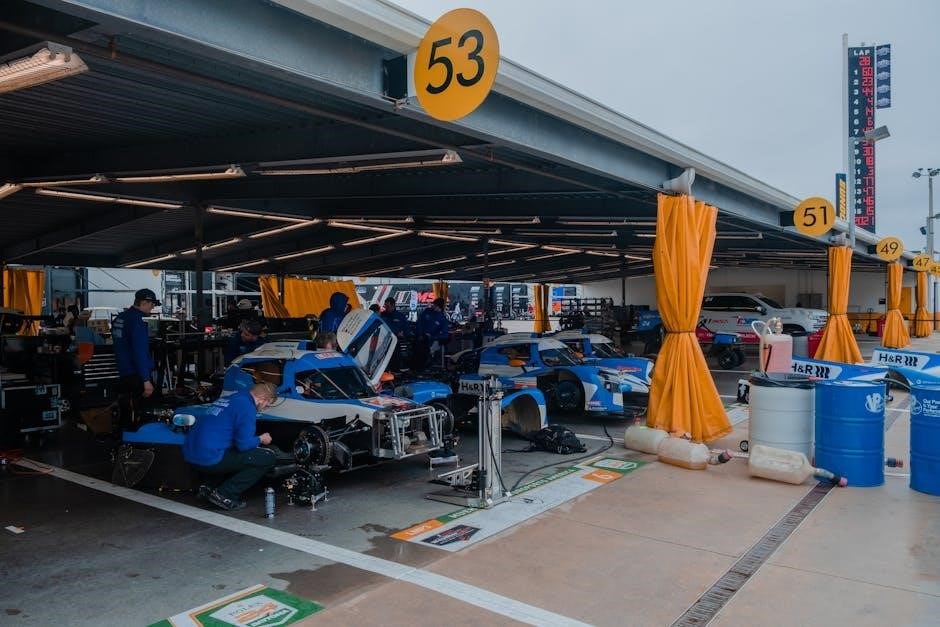
The balance between speed and fuel saving is delicate. Aggressive driving styles burn more fuel‚ potentially requiring an extra pit stop‚ while overly cautious approaches can lead to losing track position. Accurate fuel calculations‚ factoring in track conditions‚ driving style‚ and safety car periods‚ are essential for a successful strategy.
Modern F1 regulations mandate minimum fuel flow rates‚ adding another layer of complexity. Teams must ensure compliance while simultaneously optimizing fuel efficiency. Red Bull Racing‚ known for its strategic prowess‚ consistently demonstrates effective fuel management‚ allowing them to push harder when necessary. The head of race strategy plays a key role in these calculations.
Pit Stop Optimization
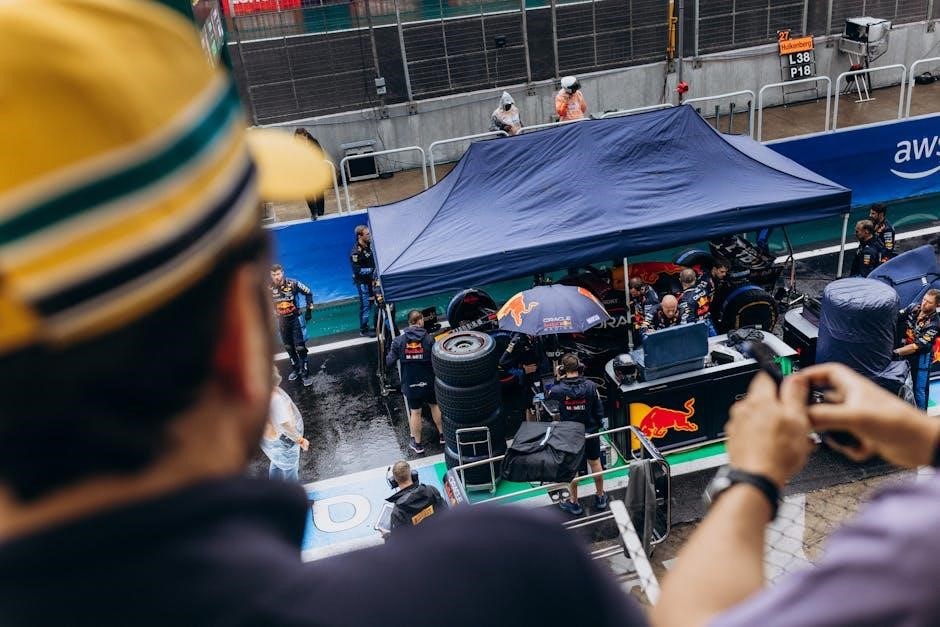
Pit stop execution is a crucial element of any successful race strategy‚ often determining a driver’s final position. Optimization involves two key areas: pit window timing and pit crew performance. Precise timing ensures minimal time loss‚ capitalizing on track position and competitor strategies. A well-timed pit stop can leapfrog a driver ahead of rivals.
Pit crews undergo rigorous training to minimize the duration of each stop‚ aiming for sub-3-second changes for all four tires. Every movement is choreographed‚ from wheel gun operation to jack handling. Even minor errors can add crucial seconds‚ negating strategic advantages. Teams constantly analyze pit stop data to identify areas for improvement.
Factors influencing pit window timing include tire degradation‚ fuel levels‚ and the potential for safety car periods. Red Bull Racing and McLaren are renowned for their consistently fast and reliable pit stops‚ showcasing the importance of dedicated personnel like Hannah Schmitz and Stephen Knowles.
Pit Window Timing
Strategic pit window timing hinges on predicting tire degradation and anticipating competitor actions. Teams analyze extensive data – lap times‚ tire pressures‚ and track temperature – to determine the optimal moment for a tire change. Early stops can offer a pace advantage on fresher tires‚ but risk being undercut by rivals staying out longer.
Conversely‚ delaying a pit stop maximizes track position but can lead to a significant performance drop as tires wear. The “undercut” involves pitting before a competitor‚ hoping to gain track position when they emerge from their stop. The “overcut” is the opposite‚ staying out longer to potentially benefit from a faster pace on newer tires.
Safety car periods dramatically alter pit window calculations. Teams must quickly assess whether to pit immediately under the safety car‚ potentially gaining a significant advantage‚ or wait for the race to resume. Accurate predictions and swift decision-making are paramount. Red Bull’s strategy team‚ led by Will Courtenay‚ excels in these dynamic scenarios.
Pit Crew Performance
Exceptional pit crew performance is crucial for executing a successful race strategy; fractions of a second can determine a driver’s position. A swift tire change – typically around 2-3 seconds – minimizes time lost in the pit lane. This requires rigorous training‚ precise coordination‚ and seamless teamwork between the crew members.
Each crew member has a specific role: wheel gun operators‚ jack operators‚ and front/rear wing adjusters. Consistent practice ensures they perform their tasks efficiently and safely. Beyond speed‚ accuracy is vital – a loose wheel nut can lead to a disastrous outcome. Teams invest heavily in pit crew training facilities and simulations.
Pit stop errors‚ though infrequent‚ can be incredibly costly. Even minor mistakes can negate the benefits of a well-planned strategy. The pressure on pit crews is immense‚ especially during critical moments of the race. Red Bull and McLaren consistently demonstrate rapid and reliable pit stops‚ showcasing their commitment to excellence.
Understanding Race Pace
Race pace isn’t simply about raw speed; it’s a complex calculation factoring in tire degradation‚ fuel load‚ and driver consistency. Teams meticulously analyze lap times across various conditions to establish a baseline pace for each driver and competitor. This data informs strategic decisions regarding pit stops and overtaking opportunities.
Predicting race pace requires sophisticated simulations and real-time data analysis. Engineers monitor tire pressures‚ temperatures‚ and wear rates to understand how performance evolves throughout a stint. Fuel consumption is also a critical factor‚ influencing the overall pace and potential for fuel-saving strategies.
Understanding a competitor’s race pace is equally important. Teams track their rivals’ lap times‚ sector times‚ and pit stop intervals to anticipate their moves and adjust their own strategy accordingly. A slower race pace might indicate a mechanical issue or a deliberate attempt to conserve tires. Accurate pace assessment is fundamental to effective race strategy.

Analyzing Competitor Strategies
Effective race strategy hinges on a deep understanding of rivals’ potential moves. Teams dedicate significant resources to predicting competitor strategies‚ analyzing historical data and real-time performance. Observing pit stop timing‚ tire choices‚ and lap times provides crucial insights into their intentions.
Anticipating a competitor’s undercut or overcut is paramount. An undercut involves pitting earlier to gain track position‚ while an overcut delays the pit stop to exploit a faster pace on fresher tires. Teams must assess the potential gains and risks associated with each maneuver‚ considering track characteristics and tire performance.
Furthermore‚ analyzing competitor’s personnel changes‚ like Will Courtenay’s move to McLaren‚ can signal shifts in their strategic approach. Understanding the strengths and weaknesses of opposing strategy teams allows for more informed decision-making. Successful strategy often involves reacting to‚ and exploiting‚ competitor vulnerabilities.
Weather Impact on Race Strategy
Unpredictable weather dramatically alters race strategy‚ introducing significant complexity. Rain necessitates swift decisions regarding tire selection – intermediate or wet tires – and pit stop timing. A timely switch to the correct tire can yield substantial gains‚ while a misjudgment can prove disastrous.
Teams closely monitor weather forecasts‚ utilizing sophisticated modeling to anticipate rainfall intensity and duration. The possibility of a drying track introduces further strategic layers‚ requiring careful consideration of when to switch to slick tires; Safety car deployments during wet conditions often create strategic opportunities.
Furthermore‚ weather impacts fuel consumption and engine management. Cooler temperatures generally improve engine performance‚ while wet conditions increase drag and reduce aerodynamic efficiency. Adapting strategy to these factors is crucial for maximizing performance. Accurate weather prediction and rapid response capabilities are essential for success.
Safety Car Periods and Strategy
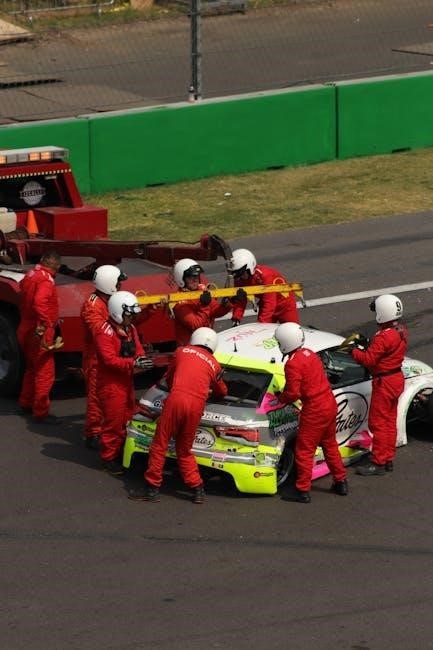
Safety car deployments are pivotal moments demanding immediate strategic recalibration. A well-timed pit stop under the safety car can significantly reduce time loss‚ effectively gaining track position. Conversely‚ staying out can preserve position but risk being overtaken after the restart.
Teams analyze the race situation – track position‚ tire condition‚ and fuel levels – to determine the optimal course of action. The length of the safety car period is a critical factor; a short period may not warrant a pit stop‚ while a prolonged period presents a valuable opportunity.
Furthermore‚ the safety car bunching up the field often negates aerodynamic advantages‚ leveling the playing field. This can benefit teams with slower cars‚ allowing them to close the gap to the leaders. Predicting the timing and duration of safety car periods is impossible‚ requiring teams to be prepared for any scenario and react decisively.
Virtual Safety Car (VSC) Strategies
Virtual Safety Car (VSC) periods present a unique strategic challenge‚ demanding rapid decision-making with reduced risk compared to a full Safety Car. The key difference lies in the delta time drivers must adhere to‚ slowing the race without bunching the cars as tightly.
Teams often utilize VSC periods for ‘cheap’ pit stops‚ minimizing time loss due to the reduced speed limit. The calculation involves assessing the time saved in the pits versus the time lost maintaining the delta. This is particularly advantageous for teams needing to change tires or address minor car issues.
However‚ a VSC can also disrupt a planned strategy. A team anticipating a later pit stop might be forced to react immediately if a VSC is deployed‚ potentially compromising their overall race plan. Accurate simulations and real-time data analysis are crucial for maximizing the benefits of a VSC period and mitigating potential drawbacks.

Red Flag Scenarios and Strategy Adjustments
Red Flag situations dramatically alter race strategy‚ presenting both opportunities and risks. Unlike VSCs‚ red flags halt the race entirely‚ allowing teams to work on cars in the pit lane. This opens the door for significant setup changes‚ tire adjustments‚ and even minor repairs – actions prohibited during a VSC or regular racing conditions.
The strategic implications are complex. Teams must anticipate the red flag duration and assess whether a tire change is beneficial‚ considering potential grid penalties for exceeding the allowed work time. Fuel levels become critical‚ as the race resumes behind the Safety Car‚ potentially leading to fuel-saving strategies.
Furthermore‚ red flags can completely reset the race order and strategic landscape. A well-timed pit stop just before a red flag can vault a driver up the order‚ while a poorly timed one can be disastrous. Accurate forecasting of potential red flag scenarios and swift adaptation are paramount for success.
Examples of Successful Race Strategies
Successful race strategies often hinge on anticipating and reacting to dynamic conditions. Examining historical examples reveals common threads: aggressive undercut/overcut maneuvers‚ capitalizing on safety car periods‚ and precise tire management. Stirling Moss’s 1958 Argentine Grand Prix victory showcased adaptability‚ while Gerhard Berger’s 1986 Mexican GP win demonstrated bold tire choices.
More recently‚ Red Bull Racing’s consistent success is attributed to their proactive strategy calls‚ led by figures like Will Courtenay and Hannah Schmitz. McLaren’s support for Oscar Piastri‚ despite debatable calls in Hungary‚ illustrates a commitment to a long-term strategic vision. These instances highlight the importance of data-driven decisions.
Effective strategies aren’t solely about speed; they’re about maximizing opportunities and minimizing risks. Goodyear’s formation of a Global Racing organization underscores the value of a unified‚ strategic approach to competition‚ aiming for consistent performance gains.
Red Bull Racing Strategy Examples
Red Bull Racing consistently demonstrates strategic prowess‚ often characterized by aggressive yet calculated risk-taking. Their team‚ spearheaded by Head of Race Strategy Will Courtenay (now at McLaren)‚ Principal Strategy Engineer Hannah Schmitz‚ and Senior Strategy Engineer Stephen Knowles‚ excels at exploiting track position and tire performance.
A hallmark of their success is the proactive undercut‚ frequently employed to gain an advantage during pit stop cycles. They’re adept at predicting competitor reactions and adjusting their plans accordingly. Red Bull also demonstrates a keen ability to capitalize on safety car and Virtual Safety Car (VSC) periods‚ maximizing track position gains.
Their strategies aren’t always conventional; they’re willing to deviate from the norm when data suggests a potential reward. This boldness‚ combined with meticulous data analysis and rapid decision-making‚ has been instrumental in securing numerous race victories and championships. They prioritize adaptability and swift responses to changing race dynamics.
McLaren Racing Strategy Examples
McLaren Racing has recently showcased a commitment to bolstering its strategic capabilities‚ notably with the acquisition of Will Courtenay from Red Bull Racing as Sporting Director. Despite some debated calls‚ such as those impacting Oscar Piastri’s potential victory in Hungary‚ the team demonstrates a clear trust in its existing strategy team and their analytical processes.
McLaren’s approach often involves a detailed assessment of tire degradation and a willingness to explore alternative strategies to maximize race performance. They are increasingly focused on optimizing pit stop timing‚ aiming to leverage track position and minimize time loss during crucial moments. Their engineers diligently analyze competitor data to anticipate strategic moves.
The team’s willingness to defend strategic decisions‚ even when facing criticism‚ suggests a strong internal conviction in their methodology. McLaren appears to be building a robust strategy framework‚ combining experienced personnel with advanced analytical tools to consistently challenge for podium finishes and race wins.
Ferrari Racing Strategy Examples
Ferrari’s race strategy has historically been characterized by a blend of aggressive ambition and meticulous data analysis. While often possessing a fast car‚ translating that speed into consistent race victories has presented challenges‚ frequently linked to strategic miscalculations or reactive decision-making during races. The team invests heavily in simulation and predictive modeling to anticipate race scenarios.
A key element of Ferrari’s approach involves understanding tire performance characteristics and optimizing pit stop windows to gain a competitive advantage. They frequently explore undercut and overcut opportunities‚ attempting to disrupt the strategies of their rivals. However‚ they have sometimes struggled with adapting to unforeseen circumstances‚ such as safety car periods or rapidly changing weather conditions.
Recent seasons have seen Ferrari focusing on improving communication between the pit wall and drivers‚ aiming for clearer and more decisive strategic calls. The team continues to refine its processes‚ striving for greater consistency and a more proactive approach to race management‚ hoping to consistently maximize points scoring opportunities.
Mercedes Racing Strategy Examples
Mercedes‚ during its dominant era‚ exemplified a data-driven and highly adaptable race strategy. Their success stemmed from a sophisticated understanding of tire degradation‚ fuel consumption‚ and car performance‚ allowing them to consistently make optimal strategic decisions. A hallmark of their approach was a proactive rather than reactive mindset‚ anticipating potential scenarios and preparing contingency plans.
The team’s strategy often revolved around maximizing track position and controlling the race pace. They were adept at utilizing the undercut and overcut to gain an advantage‚ and frequently employed team orders to protect their leading driver. Mercedes also demonstrated a strong ability to react effectively to safety car periods and virtual safety car deployments‚ capitalizing on opportunities to gain positions.
More recently‚ Mercedes has faced challenges in maintaining its strategic dominance‚ particularly with evolving regulations and increased competition. However‚ they continue to invest in advanced simulation tools and analytical capabilities‚ striving to regain their competitive edge through innovative and precise race strategy execution.
The Role of the Head of Race Strategy
The Head of Race Strategy is a pivotal figure within a Formula 1 team‚ responsible for formulating and executing the overall race plan. This individual oversees a team of engineers and analysts‚ interpreting real-time data and predicting race outcomes. Their duties encompass pre-race simulations‚ in-race decision-making‚ and post-race analysis to refine future strategies.
A crucial aspect of the role is anticipating competitor strategies and adapting accordingly. The Head of Strategy must possess a deep understanding of tire performance‚ fuel consumption‚ aerodynamic effects‚ and driver capabilities. Effective communication with the pit wall and the drivers is paramount‚ ensuring seamless execution of the plan.
Recent movements‚ like Will Courtenay’s transition from Red Bull to McLaren as Sporting Director‚ demonstrate the high demand for experienced strategists. This role requires exceptional analytical skills‚ quick thinking under pressure‚ and the ability to make critical decisions with limited information‚ ultimately impacting race results.
Key Personnel in Race Strategy Teams
Race strategy teams are comprised of specialized personnel‚ each contributing unique expertise. Beyond the Head of Race Strategy‚ key roles include Principal Strategy Engineer‚ like Hannah Schmitz at Red Bull‚ responsible for detailed simulations and scenario planning. Senior Strategy Engineers‚ such as Stephen Knowles (also Red Bull)‚ focus on real-time data analysis during races.
Data Engineers are vital‚ collecting and processing telemetry from the car to inform strategic decisions. Tire Specialists analyze tire degradation and optimal compound choices. Performance Engineers model aerodynamic effects and predict lap times. Crucially‚ a Race Coordinator manages communication between the pit wall‚ drivers‚ and the strategy team.
The effectiveness of these teams relies on seamless collaboration and clear communication. The recent appointment of Will Courtenay to McLaren’s Sporting Director role underscores the importance of experienced leadership in coordinating these diverse skillsets‚ ultimately maximizing on-track performance and race outcomes.
Recent Strategy Shifts in Formula 1
Formula 1 strategy is experiencing a dynamic period of evolution‚ driven by regulation changes and increased data availability. A notable shift is the growing emphasis on reactive strategy‚ adapting to unforeseen circumstances like Safety Car periods or rapidly changing weather conditions. Teams are investing heavily in real-time simulation capabilities to model these scenarios accurately.
Personnel movements‚ such as Will Courtenay’s transition from Red Bull to McLaren‚ signal a talent reshuffle and potential transfer of strategic philosophies. McLaren’s continued support for their strategy team‚ even after controversial calls‚ demonstrates a commitment to a long-term strategic vision. Goodyear’s formation of a Global Racing organization reflects a broader industry trend towards integrated‚ data-driven approaches.
Furthermore‚ the increasing complexity of tire compounds and the impact of DRS zones necessitate more nuanced strategic planning. Teams are now prioritizing flexibility and the ability to quickly pivot their strategies based on competitor actions and track conditions.
Tools and Technologies Used in Race Strategy
Modern Formula 1 race strategy relies heavily on sophisticated software and data analytics. Teams employ advanced simulation tools to predict race outcomes under various scenarios‚ factoring in tire degradation‚ fuel consumption‚ and competitor performance. These simulations utilize historical data‚ real-time telemetry‚ and weather forecasts to generate optimal strategies.
High-performance computing (HPC) clusters are crucial for running complex simulations quickly and efficiently. Machine learning algorithms are increasingly used to identify patterns and optimize pit stop timing. Real-time data acquisition systems collect vast amounts of information from the cars‚ providing engineers with a comprehensive understanding of performance.
Furthermore‚ dedicated strategy software integrates all this data‚ allowing strategists to evaluate different options and make informed decisions. Communication systems are vital for relaying instructions to the drivers and coordinating pit stops. The integration of these technologies is essential for gaining a competitive edge.
Future Trends in Race Strategy Development
The evolution of race strategy is poised for significant advancements‚ driven by artificial intelligence and machine learning. Expect increasingly sophisticated predictive models capable of anticipating competitor actions with greater accuracy. Real-time strategy optimization‚ dynamically adjusting plans based on unfolding race events‚ will become standard.
Greater emphasis will be placed on utilizing cloud computing for faster data processing and collaboration between trackside engineers and remote support teams. Digital twins – virtual replicas of the cars and track – will enable more realistic simulations and strategy testing. Personalized driver strategies‚ tailored to individual driving styles and strengths‚ are also on the horizon.
Furthermore‚ the integration of augmented reality (AR) could provide drivers with real-time strategic information during races. The increasing complexity of regulations will necessitate even more advanced analytical tools to ensure compliance and maximize performance. These trends will redefine the competitive landscape.